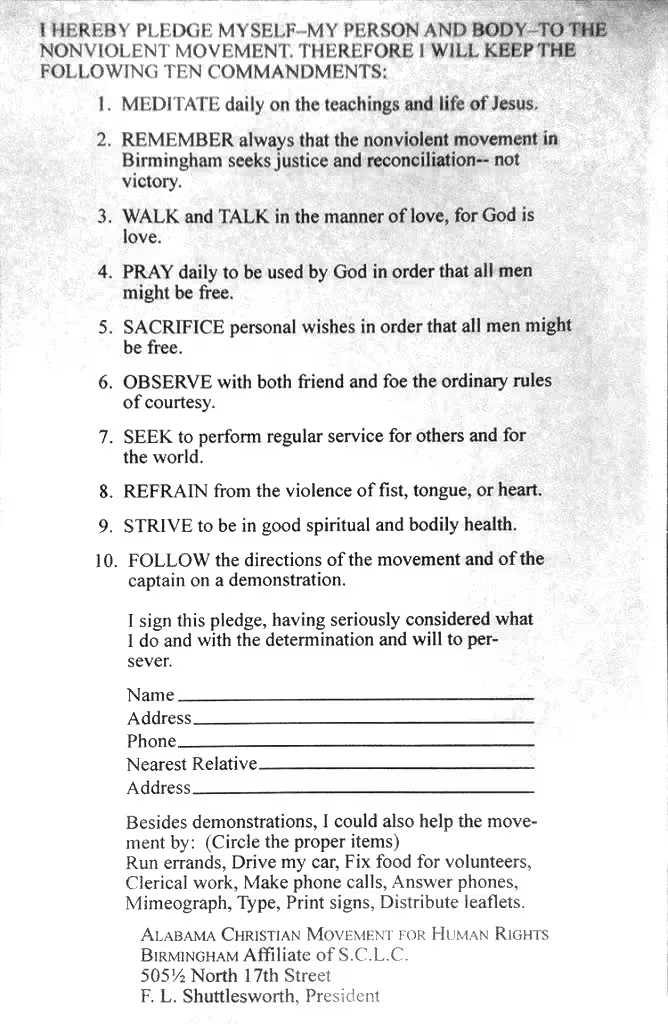
I HEREBY PLEDGE MYSELF--MY PERSON AND MY BODY--TO THE NONVIOLENT MOVEMENT. THEREFORE I WILL KEEP THE FOLLOWING TEN COMMANDMENTS:
- MEDITATE daily on the teachings and life of Jesus.
- REMEMBER always that the nonviolent movement in Birmingham seeks justice and reconciliation-not victory.
- WALK and TALK in the manner of love, for God is love.
- PRAY daily to be used by God in order that all men might be free.
- SACRIFICE personal wishes in order that all men might be free.
- OBSERVE with both friend and foe the ordinary rules of courtesy.
- SEEK to perform regular service for others and for the world.
- REFRAIN from the violence of fist, tongue, or heart.
- STRIVE to be in good spiritual and bodily health.
- FOLLOW the directions of the movement and of the captain on a demonstration.
I sign this pledge, having seriously considered what I do and with the determination and will to persevere.
Name __________________
Address_________________
Phone___________________
Nearest Relative___________
Address__________________
Besides demonstrations, I could also help the movement by: (Circle the proper items)
Run errands, Drive my car, Fix food for volunteers, Clerical work, Make phone calls, Answer phones, Mimeograph, Type, Print Signs, Distribute leaflets.
ALABAMA CHRISTIAN MOVEMENT FOR HUMAN RIGHTS
Birmingham Affiliate of S.C.L.C.
505 1/2 North 17th Street
F.L. Shuttlesworth, President
The Birmingham campaign began on April 3, 1963, with coordinated marches and sit-ins against racism and racial segregation in Birmingham, Alabama. It was coordinated by the Alabama Christian Movement for Human Rights (ACMHR) and King's Southern Christian Leadership Conference (SCLC). Wikipedia Birmingham was considered one of the most racially divided cities in the country at the time.
The Commitment Card was a pledge to follow the "Ten Commandments" of nonviolence that, according to King himself, all volunteers were "required" to sign in order to participate in the movement. It was issued under the letterhead of the ACMHR, the Birmingham affiliate of the SCLC, with Fred Shuttlesworth listed as president.
King later wrote about the card and the Birmingham campaign in his 1964 book Why We Can't Wait, where he described the movement's participants as an "army" — disciplined, trained, and bound by shared commitment rather than weapons.